The Long Tail Comes for the Creative Industry.
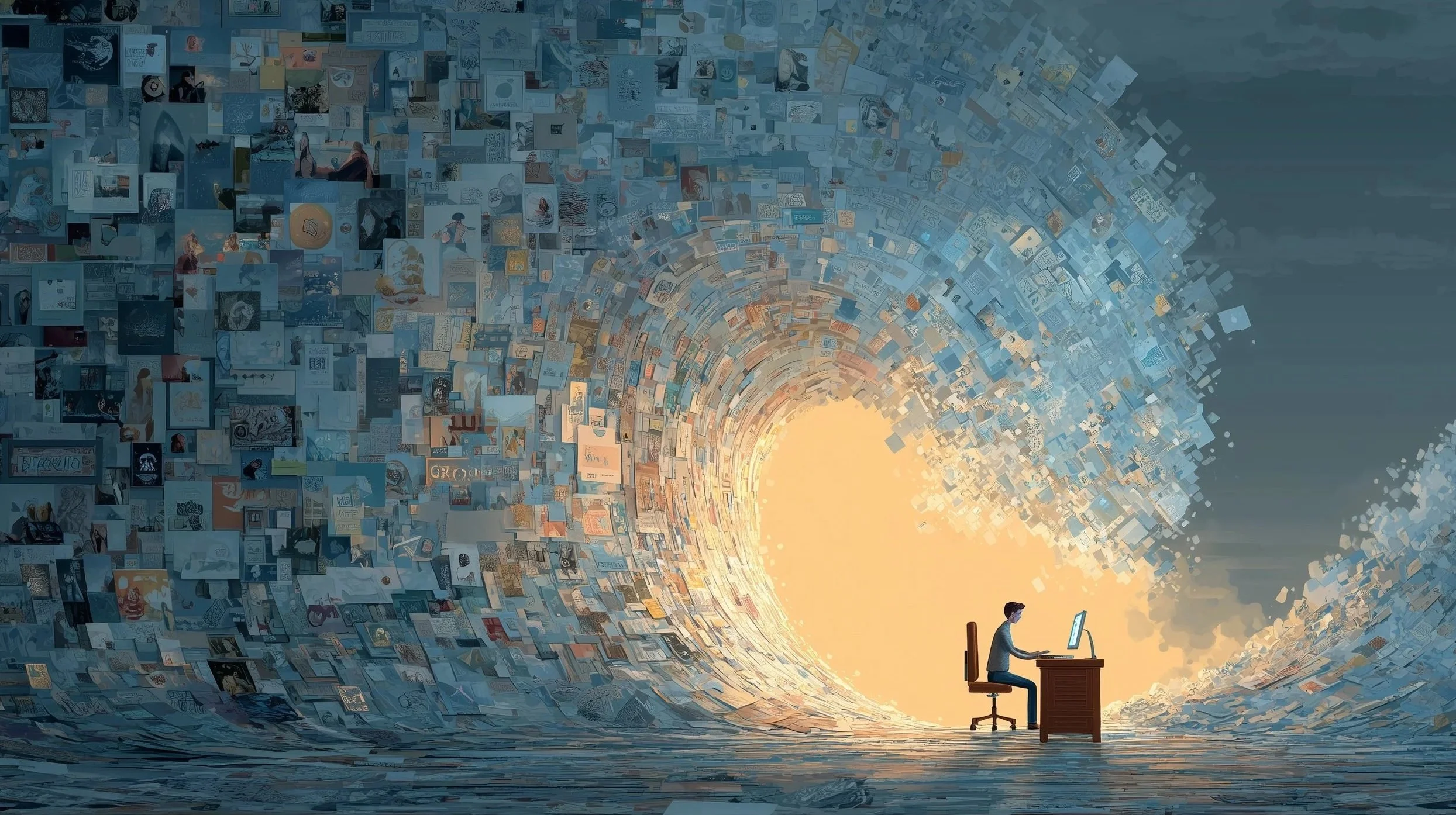
AI is flooding platforms with content, but consumers are increasingly skeptical. The agencies that win won’t be the biggest or the cheapest. They’ll be the ones delivering craft at scale.
Key Takeaways
The creative industry is splitting in two. Holding companies are merging for scale. AI is enabling a craft tail of specialized studios to serve everyone else. The hollow middle – undifferentiated shops with no clear point of view – is getting crushed from both ends.
The solopreneur-unicorn narrative is a distraction. The real shift isn’t one person running a billion-dollar company. It’s small teams operating at a scale that used to require departments.
AI creates two futures at once. Studios using AI for speed produce volume. Studios using AI for capability produce value. The market is already punishing the former.
“Slop” is making craft more valuable, not less. As AI content floods every channel, audiences are rejecting the generic. Strategy, taste, and human judgment are becoming the scarcest inputs in creative work.
The winning model is craft at scale. Small teams with deep expertise, using AI to extend their reach without diluting their standards. The tools are table stakes. The people are the differentiator.
FCB won Adweek’s Agency of the Year in 2025. A few weeks later, it ceased to exist.
After 151 years, the agency was folded into BBDO as part of Omnicom’s $13.5 billion acquisition of Interpublic Group – the largest deal in advertising history. DDB disappeared too. MullenLowe, gone. More than 10,000 jobs cut across both companies. Legacy brands that shaped decades of American advertising, retired with the efficiency of a spreadsheet formula.
The message from leadership was explicit: media, data, and platform scale come first. Creative prowess, the thing that built these agencies in the first place, no longer takes precedence.
Meanwhile, dozens of new independent agencies launched that same year. Eight of eleven Adweek Agency of the Year honorees were independents. Revenue at shops like Rethink was up 50% in the U.S. Senior talent was walking out of holding companies and hanging their own shingles faster than HR could process the exits.
Two stories. Same industry. Same year. One about contraction at the top. The other about expansion at the edges.
The middle? The middle is getting very quiet.
A Thousand Shows and Counting
If you’re old enough to remember when there were three TV networks, you already understand what’s happening.
Entertainment ran on gatekeepers for decades. Three networks. Five labels. Six studios. If you wanted to reach an audience, you went through them. Then distribution costs collapsed – first the internet, then streaming, then the tools to make content got radically cheaper. The big players didn’t die. Disney is still Disney. But the long tail exploded. Thousands of shows for specific audiences. Millions of songs no label would’ve signed. Podcasts about murder, knitting, and the history of cheese, all finding their people.
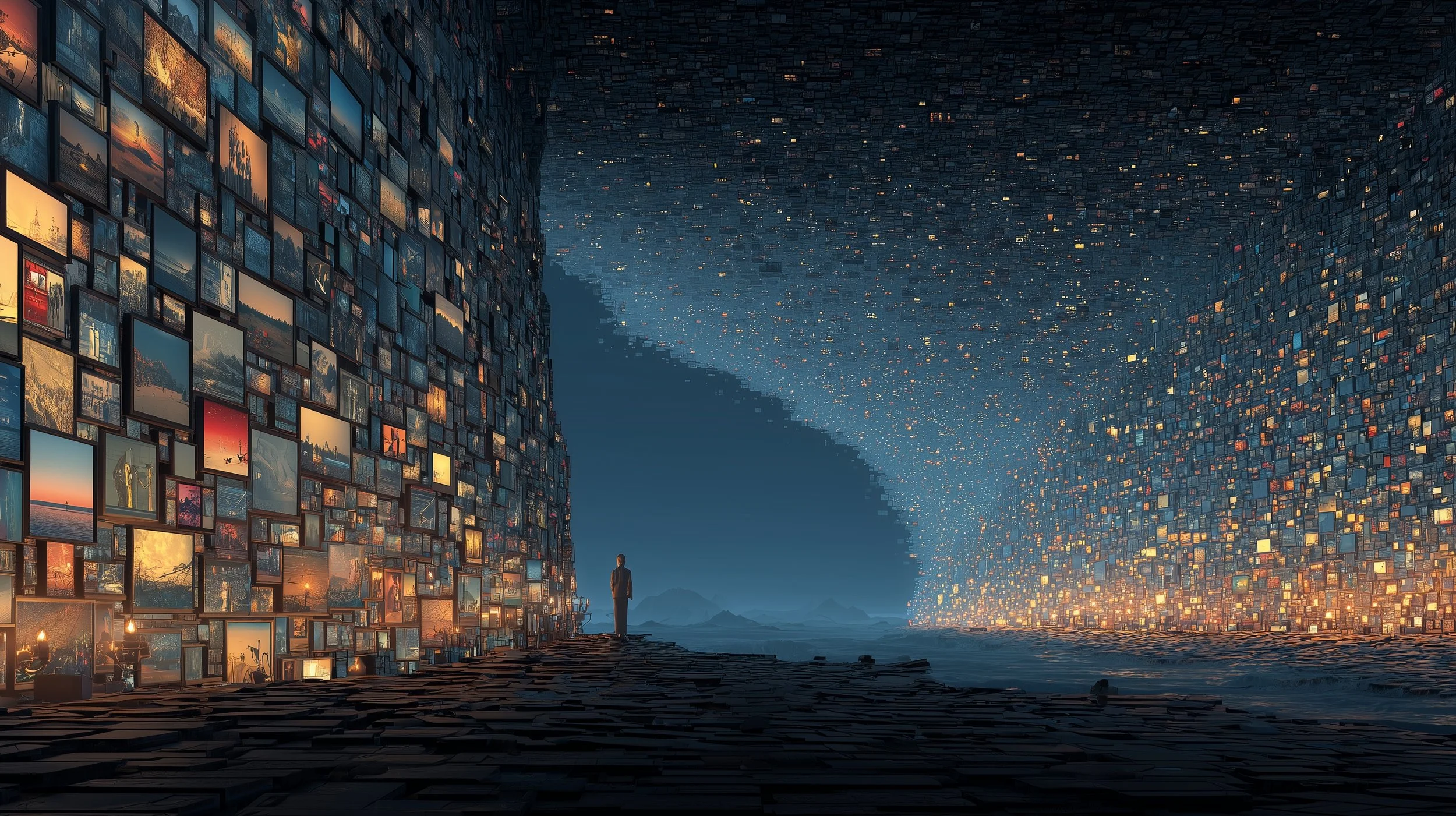
The creative services industry is heading for the same reckoning. AI is the production cost collapse. Digital distribution was already here. And the result looks familiar: consolidation at the top, fragmentation everywhere else.
At the top, Omnicom’s merged entity now exceeds $25 billion in revenue. At the bottom, brands are voting with their budgets – moving from small rosters of big agencies to large rosters of niche specialists. Three-quarters of advertisers plan to change compensation models within three years. More than half are planning fee reductions tied directly to AI.
The long-tail metaphor isn’t perfect. Critics have pointed out for years that in entertainment, hits still dominate. Give people unlimited choice and most of them will watch the same ten shows. Fair enough.
But creative services aren’t Netflix. Clients don’t discover their agency through a recommendation algorithm. They hire on expertise, trust, and relationships – which is exactly why specificity wins. The long tail doesn’t mean everyone thrives. It means more specialized businesses can make a real go of it. And the ones that earn trust will own their corner of the market.
Call it the craft tail: the growing ecosystem of creative businesses built around a clear human point of view. That might mean a distinctive approach to connecting strategy to creative. Deep expertise in a particular industry or format. A way of working that brings real brand thinking to every assignment rather than cranking content on a conveyor belt. What these agencies and studios share isn’t a size or a niche. It’s a conviction that the work should be driven by thinking and taste, with AI as the accelerant, not the autopilot.
The Billion-Dollar Distraction
You’ve seen the headlines. Sam Altman predicts the first one-person billion-dollar company. Dario Amodei says it could happen in 2026. The solopreneur-unicorn narrative has been the most overhyped story in AI for two years running.
Great conference fodder. Terrible strategy.
The honest version is less cinematic but more useful: the real shift isn’t one person running a billion-dollar company. It’s small teams of five, ten, twenty people operating at a scale that used to require fifty or a hundred. Cursor hit $500 million in annual revenue with fewer than 50 employees. Midjourney built one of the most valuable creative tools in the world with a skeleton crew. AI unicorns are reaching billion-dollar valuations in two years with around 200 people – a timeline that used to take nine years and double the headcount.
That’s the interesting part. Not the fantasy of one genius with a laptop. The reality of small, expert teams punching absurdly above their weight.
But here’s what the solopreneur narrative misses, and it matters for anyone in creative work: a solo operator with AI tools and no strategic framework produces volume, not value. AI doesn’t replace expertise. It amplifies it. One person with taste and AI fluency can do remarkable things. But a small team where strategy, creative direction, and production craft work together, with AI extending their reach? That’s where the real leverage lives.
Creative work isn’t software you ship from a server. It’s judgment applied to a client’s situation. Knowing when the brief is wrong. Understanding an audience well enough to make them feel something. Twenty years of working with a client through market cycles so you stop guessing what fits and you know.
None of that automates.
The Slop Problem
Here’s what happens when production costs collapse and everyone gets access to the same tools.
The market floods. And then it drowns.

Merriam-Webster chose “slop” as its 2025 Word of the Year. Not “vibe coding.” Not “disruption.” Slop. Defined as low-quality digital content produced in quantity by means of AI. That’s not disgruntled artists on social media. That’s the dictionary.
AI-generated articles now make up more than half of all English-language content on the web. Pinterest had to build features letting users limit AI content in their feeds after months of complaints. YouTube’s CEO named reducing slop a 2026 priority. McDonald’s pulled an AI-generated holiday ad after viewers called it soulless. Coca-Cola’s AI holiday spots sparked immediate backlash. Consumer enthusiasm for AI-generated content dropped from 60% in 2023 to 26% in 2025.
Read that last number again. In two years, enthusiasm didn’t just cool. It cratered.
This is the part of the AI revolution that the breathless trend pieces skip. When everyone uses the same tools trained on the same data, the output starts to look the same. All of it. Digital content is merging to look very, very similar. And when everything looks the same, there’s only one lever left. Price. That’s a race to the bottom, and nobody wins it.
This isn’t a new problem, by the way. Every time a creative medium gets industrialized, the same thing happens: mass production strips the work of whatever made it feel alive. You get surface-level variety – different fonts, different color palettes, slightly different hooks – hiding a fundamental sameness underneath. It looks like choice. It feels like nothing.
Scroll through any social feed right now. You can feel it.
We’ve seen this movie before. The printing press opened up publishing and created a flood of pamphlets, most of them garbage. The survivors were the ones with editorial judgment. The dot-com boom gave everyone a website. Most were useless. Podcasting gave anyone with a microphone a broadcast channel, and now a handful of shows with genuine editorial vision command the vast majority of the audience.
Same story every time: new technology, everything floods, quality crashes toward the average. And then the market starts paying a premium for the work that rises above the noise. Not because technology stops mattering, but because when everyone has it, it stops being a differentiator.
Craft becomes the scarce input. And scarce inputs are where value concentrates.
What comes next is already taking shape: a premium on real.
Not “real” as a marketing gimmick. Real as in: made by people who had something to say, understood the audience, and chose every tool with intention. Real storytelling. Real production values where they matter. Real human sensibility behind the work.
As AI content saturates every channel, audiences are developing antibodies to the generic.
The brands that break through won’t be the ones producing the most content. They’ll be the ones producing content that makes people feel something – because it was built on a genuine understanding of who they’re talking to and why it matters. That’s strategy. That’s creative conviction. That’s the thing you can’t automate.
The Studios That Survive Will Evolve…Fast.
Think about what happened to music.
For most of the twentieth century, making a record meant million-dollar consoles, rooms full of outboard gear, and five engineers riding the faders because automation didn't exist yet. If you wanted to reach an audience, you went through the gatekeepers: labels, studios, producers.
That started to crack in the mid-'90s, when Pro Tools brought the studio into the computer and Beck used samplers and digital editing to collage live recordings with found sounds on Odelay – proving these tools weren't cheap substitutes but creative instruments in their own right. Then GarageBand, Ableton, and FL Studio brought the computer into the bedroom. Billie Eilish and Finneas built a Grammy-sweeping album in a small room in Highland Park. Noah Kahan posted rough snippets of an unfinished song on TikTok from a tree farm in Vermont, tested lyrics for two years with an audience that felt like collaborators, and sold out Fenway Park before most of the industry knew his name.
Thirty years. From the mixing console to the phone screen. And the same truth at every step: the artists who broke through weren't the ones with the best gear. They were the ones with a point of view – who used the tools to express something distinctly theirs, not to outsource the creative work to the technology.

For every artist like that, ten thousand bedroom producers churned out derivative beats. Having the tools was necessary. Having the tools was not sufficient.
And now the cycle is accelerating again. Spotify promised to democratize distribution, and it did – but the algorithm became the new gatekeeper, favoring familiarity over risk. Sixty thousand tracks uploaded daily. Most never reach a thousand streams. And AI-generated music is flooding the platform by the thousands – ambient loops, lo-fi beats, sleep sounds – all algorithm-friendly, all virtually indistinguishable from each other. The artists who cut through the noise are still the ones with something real to say.
That's the parallel for creative studios right now. AI is our Pro Tools moment – except what took music thirty years to sort through, AI is compressing into five or less. The old definition of what a studio needs – big teams, big overhead, a department for everything – is being rewritten.
Think of the winners as the micro-majors of the creative industry. In film, A24 and Lionsgate carved space between the big six and the true independents by being deliberate about what they were and ruthless about what they weren't. The micro-major creative studio does the same thing: craft at scale. Strategic thinking and creative execution from a team small enough to be nimble and experienced enough to know which tool, human or AI, fits which job.
But only if the people are the point. Only if strategy drives creative, and creative drives tool selection. Never the other way around.
That's how we operate at Greenhouse Studios. We're a content studio within a brand strategy and advertising firm that's been at this for over two decades, working across industries from financial services to outdoor brands to technology startups. Strategy first. Always.
What's changed is the scale of what a team like ours can do. AI isn't a separate offering. It's woven into how we work. Sometimes it leads – an entirely AI-generated video for Curi Capital that required brand strategy, scriptwriting, AI environments, voice cloning, and traditional editorial craft. Sometimes it supports – concept visualizations that show a client what we're about to film before a camera rolls, or research sprints that compress strategy work from weeks into days. Sometimes it's invisible – accelerating workflows, distilling insights from sessions, handling scaffolding so the humans can handle the decisions. We've written about what that AI video process actually looked like, because the industry needs fewer promises and more honest reporting from the front lines.
The model is a hub-and-spoke. Experienced people at the center of each creative discipline, with AI as the force multiplier radiating outward. Exactly like those musicians who learned to use production tools to create big-budget results without needing a big-budget studio. The laptop doesn’t write the song. The artist does.
The Constraint Isn’t Budget Anymore
Everyone has access to the same AI platforms now. Everyone can generate images, write copy, produce video at speeds that would've seemed absurd three years ago.
So what's left?
Imagination. Judgment. The discipline to start with strategy instead of a tool. The experience to know that a brand's audience doesn't care how the content was made – they care whether it makes them feel something real.
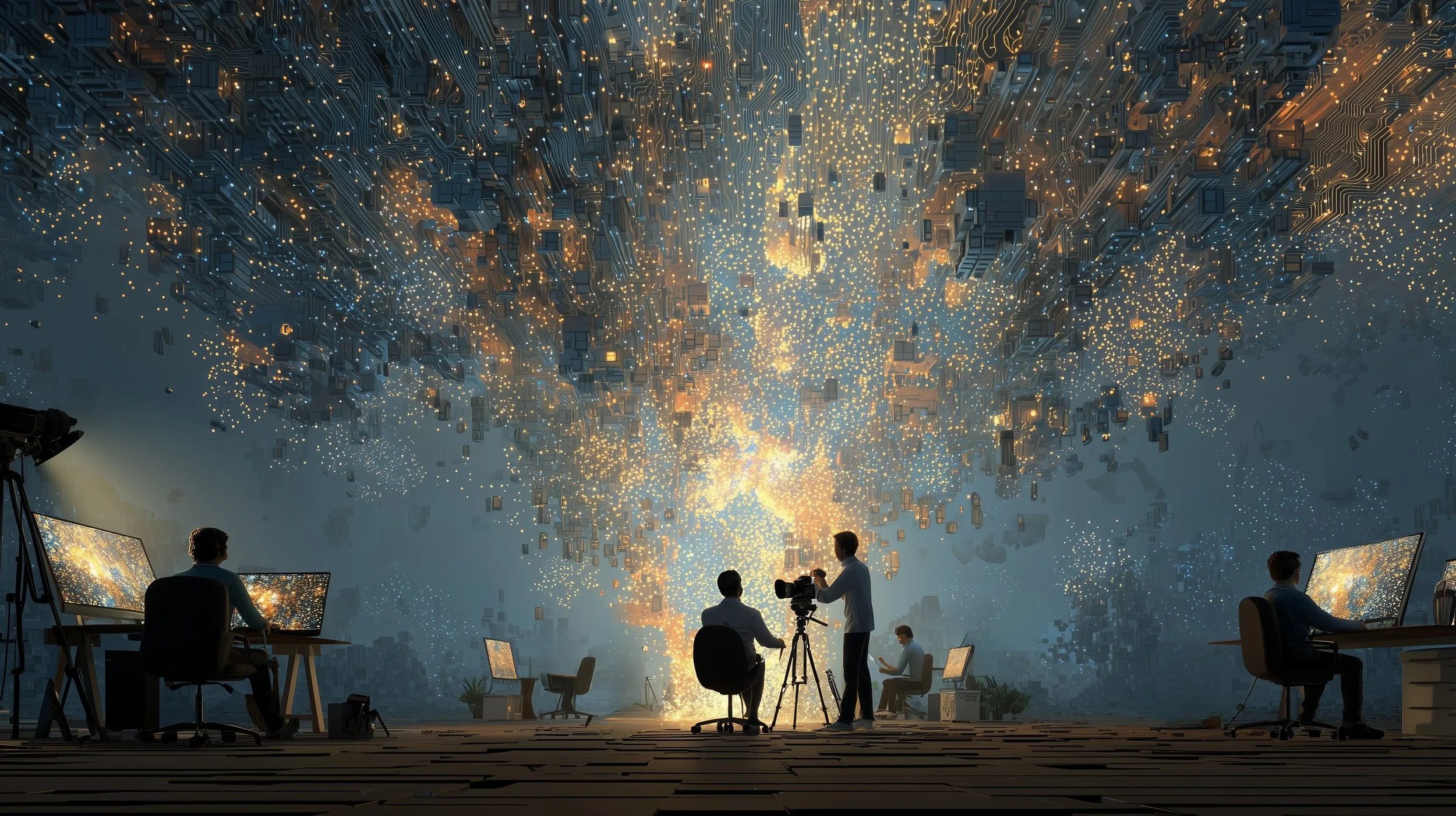
Agencies stuck in the hollow middle – doing a little of everything for anyone who calls, no clear point of view, no distinctive capability, regardless of whether they have ten people or two hundred – are the ones who should be paying attention. The hollow middle isn't a size. It's a way of working. And the craft tail doesn't reward scale. It rewards a clear reason to exist.
If all we're doing is doing more stuff faster, we'll race to the bottom on fees. But if we're using these tools to do work that couldn't exist before, and pairing them with the strategic rigor and creative taste that only experienced people bring, then we're building something the market increasingly wants and decreasingly finds.
AI is the force multiplier. People are the force.
A clear strategy, a real idea, honest storytelling, and the craft to make it land. AI didn't change any of that. It just raised the stakes.
Greenhouse Studios is the content studio within Greenhouse Partners, an award-winning brand strategy and advertising firm based in Boulder, Colorado. We help brands tell stories that matter, with whatever tools make sense for the work.
FAQs
How is AI changing the creative agency model?
AI is accelerating a structural split. Large holding companies are consolidating around data and media platforms, while AI tools make it viable for smaller, specialized studios to compete on quality and capability. The studios winning in this environment use AI to expand what’s possible – not just to do the same work faster and cheaper.
What is the long-tail effect in creative services?
The long-tail effect describes how reduced production costs create space for more specialized businesses to serve niche markets viably. In creative services, AI is lowering production costs while digital distribution connects studios with clients globally. More specialized studios can thrive, serving clients who need real expertise rather than generalist coverage.
Can small creative agencies compete with large holding companies?
Yes, and increasingly, they’re winning. Eight of Adweek’s eleven 2025 Agency of the Year honorees were independents. Small agencies compete by offering deeper expertise, faster execution, senior-level attention, and strategic AI integration. Brands are shifting from small rosters of big agencies to larger rosters of specialized ones.
What is AI slop and why should brands care?
AI slop is low-quality, generic content mass-produced with AI tools. Merriam-Webster named it the 2025 Word of the Year. Consumer enthusiasm for AI content dropped from 60% to 26% in two years. For brands, more content faster isn’t a strategy. Better, more distinctive work guided by human strategy and taste is.
What is the hollow middle in the creative industry?
The hollow middle isn’t about company size – it’s about a way of working. Agencies stuck in the hollow middle do a little of everything for anyone who calls, with no clear point of view or distinctive capability. Whether you have 10 people or 200, the path out is deliberate positioning: a clear reason to exist, a specific combination of capabilities, and the willingness to be known for something.
How do you choose between AI and traditional production?
Start with the creative concept, not the tool. AI excels at world-building and scenarios that would be cost-prohibitive to produce traditionally. Traditional production excels when authenticity and human performance matter most. The best results usually combine both, which requires experienced people who know what fits where.
What kind of work does Greenhouse Studios do?
We produce branded content, video, documentary storytelling, social content, and AI-enabled creative workflows. We pair brand strategy with production craft, using whatever tools serve the work. Based in Boulder, Colorado, we work with clients across the U.S. and internationally. Check out some of our work here.
How can I contact Greenhouse Studios to discuss a project?
Use the form below to tell us about your project. We’d love to talk!